
South Africa
Luxury Cape Town Holidays
— The Destination —
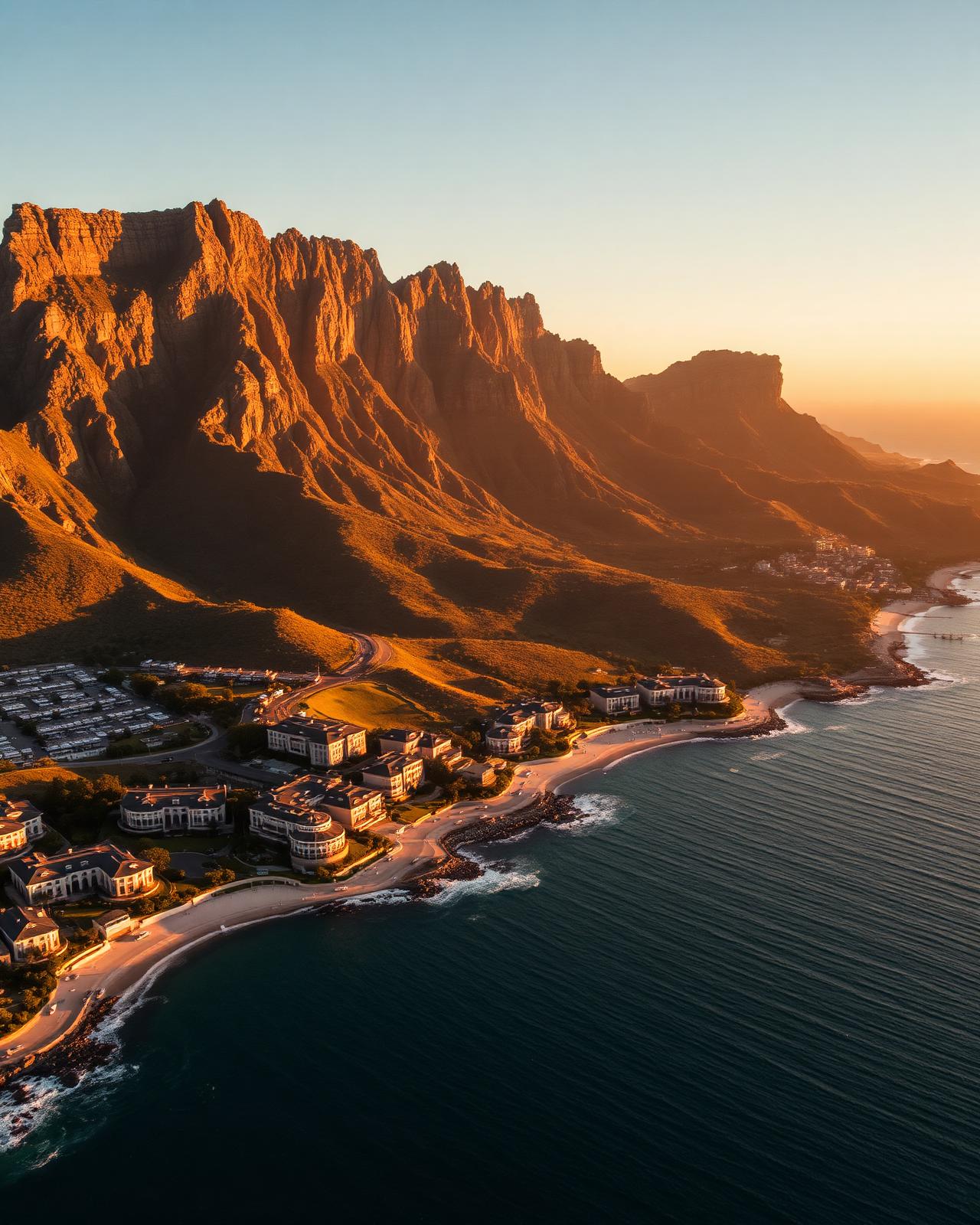
Where Table Mountain falls into two oceans. A city of contemporary art, world-class kitchens and cellar doors framed by some of the most photographed coastline on earth. Pair days on Clifton beach with vineyard lunches an hour inland and a helicopter transfer down the Cape Peninsula to Cape Point.
— When to go —
Best time to visit
November to March — warm, dry summer days with endless blue skies and the city at its most open-air.
Climate & weather
Mediterranean climate with warm, dry summers (20–28°C) and mild, wet winters (12–18°C). The famous Cape Doctor wind sweeps through in summer, keeping the air crisp and clear.
— Places to visit —
Highlights of Cape Town
Table Mountain
the flat-topped icon presiding over the city, ascended in five minutes by rotating cable car or on foot via the Platteklip Gorge for those who prefer to earn the view. The summit plateau opens onto endless panoramas of the Atlantic seaboard, the City Bowl, and on a clear day, the distant peaks of the Hottentots-Holland an hour inland.
Cape Peninsula & Cape Point
the dramatic finger of land where the cold Atlantic and warmer Indian Oceans converge in a single cinematic sweep. A full day's drive takes in the Chapman's Peak corniche, the baboon-patrolled Cape of Good Hope reserve, and the original Victorian lighthouse reached by funicular or footpath above the cliffs.
Robben Island
UNESCO World Heritage Site and the windswept former political prison where Nelson Mandela spent eighteen of his twenty-seven years in captivity. Ferries depart from the V&A Waterfront for half-day visits led by former inmates, whose firsthand accounts give the tour a weight no museum could replicate.
Kirstenbosch National Botanical Garden
five hundred and twenty-eight hectares of indigenous flora ranged across the eastern slopes of Table Mountain, widely considered one of the great botanical gardens of the world. The Boomslang canopy walkway threads through the treetops, and summer Sunday concerts on the lawns are a Cape Town institution.
Boulders Beach
a sheltered cove of granite boulders near Simon's Town that has, since 1982, been home to a thriving colony of African penguins. Boardwalks let you observe the nesting birds at close range, while the swimming beach next door is one of the warmest and calmest in the Cape.
V&A Waterfront
the working harbour reimagined as the city's social heart, with the Zeitz Museum of Contemporary Art Africa (housed in a converted grain silo by Heatherwick Studio), the Watershed craft market, harbourside oyster bars and direct departures for Robben Island, helicopter tours and sunset sailings.
— Beyond Cape Town —
Nearby attractions & onward journeys
Cape Winelands
Stellenbosch, Franschhoek and Constantia, the three historic wine wards within an hour of the city, offer Cape Dutch estates, three-Michelin-star kitchens and tastings of Chenin, Pinotage and the méthode cap classique sparkling wines the region is increasingly known for.
Hermanus & Walker Bay
ninety minutes east along the coast, the world's premier land-based whale-watching destination. Between June and November, Southern Right whales calve metres from the cliff path, and the official whale crier walks the town announcing each sighting on his kelp horn.
West Coast National Park
ninety minutes north of the city, a tidal lagoon and fynbos reserve that explodes into a carpet of orange, white and purple wildflowers each August and September, drawing botanists and photographers from around the world.
Hout Bay & Chapman's Peak Drive
a working fishing harbour and one of the world's most photographed coastal roads, cut into the cliff face above the Atlantic with twenty-six hairpin bends linking the Cape Peninsula's two southern coasts.
— Where to stay —