
Vietnam
Luxury Halong Bay Cruises
— The Destination —
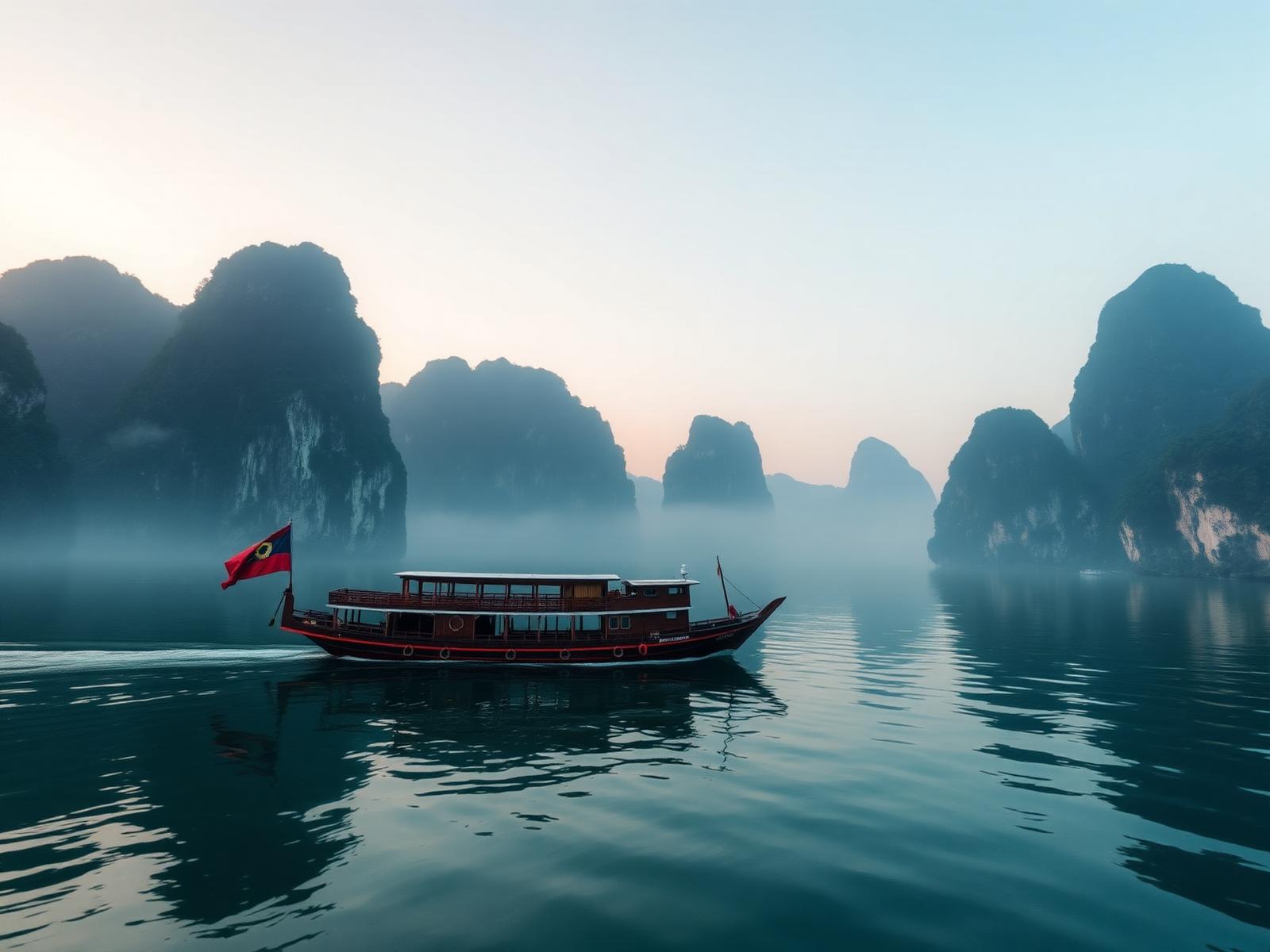
A UNESCO seascape of nearly two thousand limestone karsts rising from emerald water. Best seen slowly, from the deck of a private junk — sea kayaks at dawn, cave dinners by lantern, and stargazing from the top deck.
— When to go —
Best time to visit
October to December and March to May — clear skies, moderate temperatures and calm waters for cruising and kayaking.
Climate & weather
Humid subtropical with hot, wet summers (25–35°C) and cool, dry winters (15–22°C). Mist and drizzle are common in January and February, adding atmosphere to the karsts.
— Places to visit —
Highlights of Halong Bay
Sung Sot Cave
the largest and most magnificent grotto in Halong Bay with three vast chambers.
Ti Top Island
360° bay views from the summit after a short climb, plus a crescent beach for swimming.
Cua Van Floating Village
traditional fishing village with floating houses, schools and a cultural centre.
Luon Cave
kayak through a low archway into a hidden lagoon surrounded by cliffs on all sides.
Cat Ba Island
national park hiking, beaches and the island's main town with fresh seafood restaurants.
Bai Tu Long Bay
quieter neighbour to Halong with identical karst scenery and far fewer vessels.
— Beyond Halong Bay —
Nearby attractions & onward journeys
Hanoi
the Old Quarter, Hoan Kiem Lake and street-food capital, 2.5 hours by road.
Ninh Binh & Tam Coc
the 'Halong Bay on land' karsts and rice paddies, three hours away.
Sapa & the northern highlands
terraced rice fields and hill-tribe villages, an overnight train from Hanoi.
Lan Ha Bay
Halong's quieter southern neighbour off Cat Ba Island.
— Where to stay —