
Israel is one of the most layered destinations on Earth. In a single trip you can walk the stone lanes of Jerusalem's Old City, swim in the Dead Sea, eat your way through Tel Aviv's markets and snorkel over coral in Eilat. The distances are small, but the experiences are vast — sacred history, modern culture, desert adventure and beach relaxation all within a few hours' drive.
This guide covers the destinations we send clients to most, whether you are planning a faith-focused pilgrimage, a cosmopolitan city-and-beach break, or a winter-sun escape to the Red Sea.
The Destinations, One by One
What each region is really like, and what to do with your time there.
Jerusalem
Best for history, faith and ancient quarters
One of the world's oldest continuously inhabited cities, sacred to Judaism, Christianity and Islam. The Old City's four quarters — Jewish, Christian, Muslim and Armenian — are packed with sites that shaped world history.
Highlights: Western Wall, Church of the Holy Sepulchre, Dome of the Rock, Via Dolorosa, Mount of Olives, Yad Vashem, Mahane Yehuda market.
Tel Aviv
Best for beaches, food and modern energy
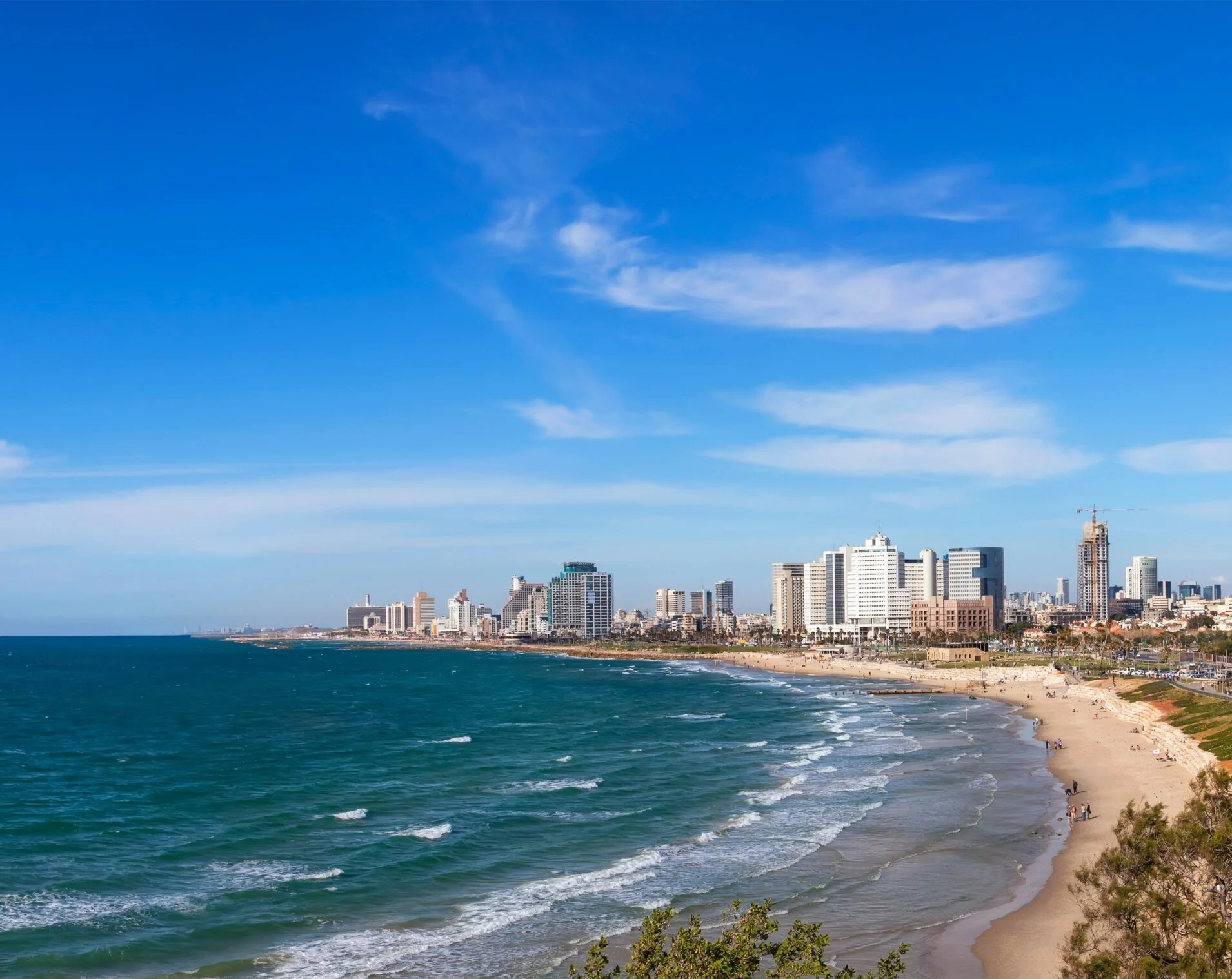
Israel's coastal capital of cool: Bauhaus architecture, a packed calendar of festivals, a world-class food scene and a long sandy promenade that fills with runners, surfers and café culture from dawn until late.
Highlights: White City UNESCO district, Jaffa old port, Carmel Market, Neve Tzedek, Tel Aviv Port, the beach promenade, nightlife in Florentin.
The Dead Sea
Best for wellness and otherworldly landscapes
The lowest point on Earth, where the water is so salty you float effortlessly. Surrounded by desert cliffs, it is as much about the spa resorts and mineral treatments as the famous photo of yourself reading a newspaper in the water.
Highlights: Float in the Dead Sea, Ein Gedi nature reserve, Masada fortress at sunrise, Dead Sea mud treatments, Jordan River views.
Eilat & the Red Sea
Best for winter sun, diving and desert
Israel's southernmost city sits on the northern tip of the Red Sea, with warm, clear water year-round. It is a brilliant winter-sun option: combine coral reefs, dolphin encounters and desert adventures with luxury beachfront resorts.
Highlights: Coral Beach Nature Reserve, Dolphin Reef, Timna Park, Red Canyon, Petra day trips into Jordan, Underwater Observatory.
Galilee & Nazareth
Best for biblical landscapes and slower travel
The green hills of the Galilee feel a world away from the coastal cities. Nazareth's Basilica of the Annunciation, the Sea of Galilee and the Golan Heights offer a more contemplive, rural side of Israel.
Highlights: Nazareth Old City, Sea of Galilee boat trip, Capernaum, Mount of Beatitudes, Golan Heights wineries, Safed artists' quarter.
Masada & the Negev
Best for desert drama and adventure
Masada is the iconic mountaintop fortress above the Dead Sea, best visited at sunrise. The wider Negev Desert offers jeep safaris, stargazing, Ramon Crater and some of Israel's most dramatic scenery.
Highlights: Sunrise hike or cable car up Masada, Ramon Crater, Avdat National Park, Bedouin hospitality experiences, Makhtesh Katan.
Israeli Food & Wine
Best for market tours and vineyard visits
Israeli cuisine is one of the most exciting in the Middle East: hummus, falafel, shakshuka, fresh seafood, and a fast-growing wine scene in the Galilee, Golan and Judean Hills.
Highlights: Mahane Yehuda market tasting tour, Carmel Market, winery visits in the Golan Heights, Tel Aviv's Miznon, Abu Hassan hummus in Jaffa.
Destination Comparison Table
A side-by-side look at atmosphere, time needed and what each destination does best.
| Destination | Atmosphere | Time needed | Best for |
|---|---|---|---|
| Jerusalem | Ancient & deeply moving | 2–3 nights | History, faith, culture |
| Tel Aviv | Coastal & cosmopolitan | 2–4 nights | Beaches, food, nightlife |
| Dead Sea | Wellness & desert | 1–2 nights | Spa, floating, Masada |
| Eilat | Resort & Red Sea | 2–3 nights | Winter sun, diving, family |
| Galilee | Rural & biblical | 1–2 nights | Scenery, wineries, faith |
| Negev & Masada | Adventure & dramatic | Day trip / 1 night | Hiking, stargazing, history |
Best Time to Visit Israel
Israel is a year-round destination, but the right season depends on where you are going.
March – May (spring)
The most pleasant time to travel: wildflowers in the Galilee, warm but not scorching temperatures, and Passover/Easter bringing extra atmosphere in Jerusalem. Book early for Easter week.
June – August (summer)
Hot and dry, especially in the Dead Sea and Negev. Coastal Tel Aviv and Eilat are popular for beach holidays; Jerusalem is cooler due to altitude but crowded with family visitors.
September – November (autumn)
Another excellent window. The High Holy Days (Rosh Hashanah and Yom Kippur) bring a unique stillness to the country, and the weather is warm and settled through October.
December – February (winter)
Mild on the coast and in Jerusalem; Eilat is the stand-out winter-sun destination with temperatures in the mid-20s°C. Rain is possible in the north and centre.
Planning Tips for Israel
Combine city, sea and desert
The best Israel itineraries mix Jerusalem's history, Tel Aviv's energy and the Dead Sea or Eilat for relaxation. Allow 7–10 nights for a comfortable first visit.
Dress modestly at religious sites
Shoulders and knees should be covered at holy places in Jerusalem, the Galilee and elsewhere. A light scarf is useful for women at some sites.
Friday sunsets and Saturdays
Shabbat runs from Friday sunset to Saturday sunset. Public transport largely stops, many shops close and Jerusalem becomes very quiet. Plan travel between cities accordingly.
Security is part of daily life
Bag checks and armed security are normal at hotels, malls and transport hubs. Stay informed through the FCDO travel advice and follow local guidance. Most visits are trouble-free.
Know Before You Go
Getting there. Direct flights from London to Tel Aviv take around 5 hours. Ben Gurion Airport is modern and efficient, with fast road and rail links to Tel Aviv and Jerusalem.
Currency. The Israeli shekel (ILS). Credit cards are widely accepted; cash is useful for small market purchases and tips.
Language. Hebrew and Arabic are official; English is widely spoken in hotels, restaurants and tourist areas.
Shabbat. From Friday sunset to Saturday sunset, public transport is limited and many businesses close. Plan inter-city travel for Saturday evening or Sunday.
Border crossings. Day trips to Petra and Wadi Rum from Eilat are popular. Check current visa requirements and travel advice for Jordan before booking.
Plan your Israel holiday
Our advisors have travelled Israel's key routes and can build an itinerary that balances history, culture, relaxation and adventure — with full ATOL protection.