

The journey
Overview
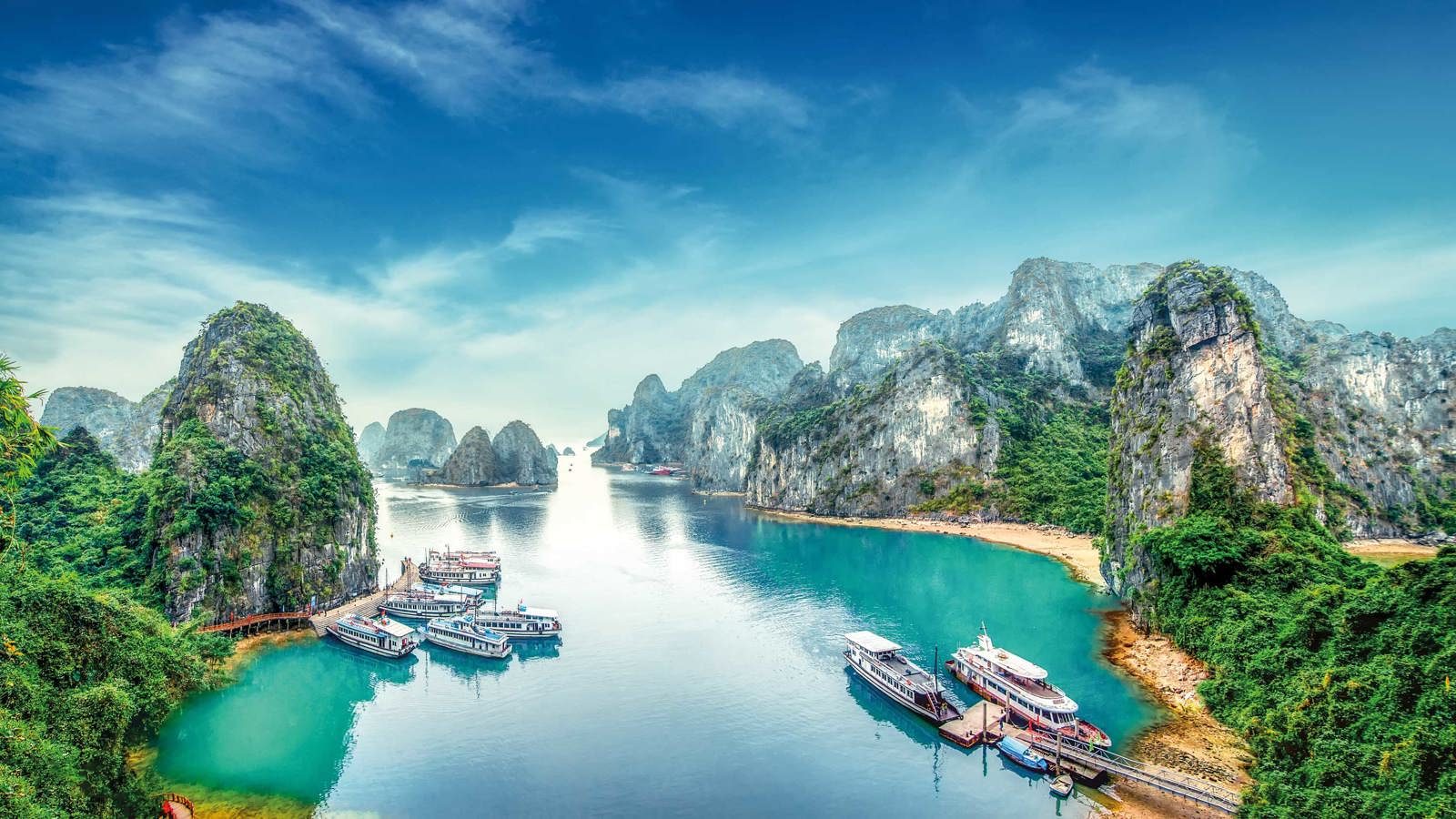
From Hanoi’s streets to an overnight cruise through Ha Long Bay’s limestone seascapes, and from Ho Chi Minh City to the waterways of the Mekong Delta, this journey showcases the best of Vietnam. Continue into Cambodia and Laos to discover Angkor’s temples and the beauty of Luang Prabang. Encompassing the highlights of three fascinating and contrasting countries, introducing local customs and traditions, and featuring centrally located hotels that allow for independent exploration, this journey showcases the famous and fabled landmarks of Vietnam, Cambodia and Laos. The adventure begins in Vietnam's elegant capital, Hanoi, where more than a thousand years of history are reflected in graceful colonial buildings, ancient temples and a deeply rooted sense of tradition. From here, we cruise into the spectacular scenery of Ha Long Bay, spending two memorable nights among its emerald waters and dramatic limestone karsts. Continuing south, we fly to Ho Chi Minh City, the vibrant phoenix of former Saigon, where gleaming skyscrapers rise alongside riverside communities, bustling markets, historic monuments and atmospheric temples. The journey then ventures deep into the Mekong Delta, known as the Nine Dragons Delta for its network of rivers and tributaries. Staying in Can Tho and Chau Doc reveals a slower-paced world of floating markets, fertile orchards, rural villages and life shaped by the river. Crossing into Cambodia, we discover contemporary Siem Reap, gateway to the magnificent temples of Angkor. Here, among some of the world's most remarkable archaeological treasures, stands Angkor Wat, the largest religious monument ever built. Time on Tonle Sap Lake offers further insight into the unique traditions and lifestyles of the region. The tour concludes in Laos, where enchanting Luang Prabang, hidden from the wider world until tourism arrived in 1989, remains one of Southeast Asia's most atmospheric destinations. Nestled between rivers and mountains, and centred on a collection of gleaming Buddhist temples, this UNESCO-listed town blends spiritual heritage, French colonial charm and natural beauty to provide a fitting finale to an unforgettable Indochina adventure.
Unforgettable moments
Highlights
01
Tour Vietnam's capital Hanoi
02
Overnight cruise in Ha Long Bay
03
The labyrinth of the Cu Chi Tunnels
04
Cruise in the Mekong Delta
05
UNESCO Site: Angkor Wat
06
UNESCO Site: Luang Prabang
Your itinerary
Day by day
- Day1
Join tour in Hanoi and Dinner at KOTO+
Hotel check in starts from 3pm and is strictly followed. If you require an early check in, there is an additional fee and dependent on availability.
Your Tour Guide will meet you in the hotel reception at 6pm for a welcome briefing before dinner at KOTO Restaurant. If you arrive later and miss the join time, our Tour Guide will catch up with you at a later point.
KOTO (Know One, Teach One) is a social enterprise founded by Jimmy Pham to support vulnerable young people in Vietnam. After meeting street children living in difficult conditions, he created KOTO to provide them with education, hospitality training, and life changing opportunities. By dining here, you are helping support this inspiring program and the young trainees building brighter futures.
(D)
- Day2
Embark on a full day city tour of Hanoi+
After breakfast, we begin our full day discovery of Hanoi, a city that beautifully blends ancient heritage with modern Vietnamese life. Our morning starts in the Ho Chi Minh Quarter, an important political and cultural complex. Here, we visit the Ho Chi Minh Mausoleum, where the nation’s beloved leader lies in state. We then explore his modest “house on stilts”, which offers a touching insight into his simple lifestyle. Our walk continues past the striking Presidential Palace, built during the French colonial era, and to the iconic One Pillar Pagoda, a historic Buddhist structure symbolising compassion and purity.
Next, we make our way to the Vietnam Museum of Ethnology, the country’s leading cultural museum. Here, we gain a deeper appreciation of Vietnam’s 54 ethnic groups, each with its own traditions, language, crafts, and way of life. Through exhibitions, traditional houses, textiles, and cultural displays, we learn how these communities have shaped the nation’s identity and how their heritage is preserved today.
For lunch, we enjoy a classic Vietnamese experience at a local restaurant, where we savour a comforting bowl of beef or chicken noodle soup—a dish considered the heart of Vietnamese cuisine.
In the afternoon, we visit the serene Temple of Literature, founded in 1070 as Vietnam’s first university. Dedicated to Confucius and generations of scholars, the temple’s courtyards, ancient steles, and traditional architecture offer a peaceful escape and a glimpse into Vietnam’s scholarly past.
We then take a gentle walking tour around Hoan Kiem Lake, one of Hanoi’s most beloved landmarks. As we stroll around the lake, we hear stories of the legendary golden turtle and make a visit to the charming Ngoc Son Temple, situated on a small island connected by a red wooden bridge.
We conclude our day with a performance at the traditional Water Puppet Theatre. This uniquely Vietnamese art form dates back over 1,000 years to the Ly dynasty and originated in the flooded rice fields of the Red River Delta. Using water as a stage, puppeteers bring to life scenes of rural life—such as farming, fishing, festivals, and folktales—as well as ancient legends and myths. The vibrant music, skilled puppetry, and storytelling offer us a delightful and immersive cultural experience.
(B, L)
- Day3
Transfer to Ha Long Bay with its mystical scenery+
- Day4
Continue exploring the Lan Ha Bay area from the water+
- Day5
Visit Trung Trang Cave and Cat Ba Island and flight to Ho Chi Minh City+
- Day6
Morning visit to Cu Chi Tunnel and afternoon tour of Ho Chi Minh City+
This morning, we set out for our half day excursion to the historic Cu Chi Tunnels. As we leave the city behind, the landscape gradually shifts from bustling streets to peaceful countryside, preparing us for a fascinating look back into Vietnam’s wartime history. Upon arrival, we explore the vast underground network that once served as a crucial base for the Viet Cong during the Vietnam War. Stretching more than 200 km, these tunnels were entirely dug by hand through dense, compact laterite soil. They housed everything from command posts and living quarters to makeshift hospitals, kitchens, and weapon workshops—an entire hidden world beneath the ground. As we walk through the area, we gain insight into the incredible resilience and ingenuity of the people who lived and fought here. Cleverly concealed entrances, sophisticated ventilation systems, and an array of camouflaged traps reveal the strategic brilliance that allowed the tunnels to remain undetected for years.
A section of the tunnels has been widened for visitors, and those who wish can experience moving through a short portion to better understand the challenging conditions faced by the guerrilla fighters. In the afternoon, we make our way to the Reunification Palace, a landmark deeply tied to Vietnam’s modern history. As we walk through its grand halls and preserved war rooms, we can almost feel the weight of the decisions once made here. The architecture, frozen in its 1970s style, gives us a fascinating glimpse into the country’s past, and from the rooftop helipad to the underground command bunkers, every corner has a story waiting to be discovered. From there, we continue to the History Museum, where we journey even further back in time. Moving through the galleries, we explore centuries of Vietnamese culture—from ancient artifacts and Cham sculptures to beautifully preserved relics of the country’s diverse dynasties. Each exhibit helps us connect the dots between Vietnam’s ancient heritage and the vibrant culture we see today.
Next, we enjoy a photo stop at the Notre Dame Cathedral (currently covered in scaffolding), admiring its elegant French-colonial architecture from the outside. Its tall twin bell towers and striking red-brick façade make it one of Ho Chi Minh City’s most iconic landmarks. Just a short stroll away, we stop by the General Post Office, another beautiful piece of colonial architecture. With its arched ceilings, vintage maps, and intricate ironwork, it feels like stepping into a living museum. We end the afternoon at the Opera House, pausing outside to appreciate its ornate façade. Built in the French colonial era, it stands proudly amid the modern bustle of the city. Its elegant curves and dramatic detailing make it the perfect final highlight of our afternoon exploration. (B)
- Day7
Explore the Mekong Delta and stay in Can Tho+
We begin our day leaving Ho Chi Minh City for a full day journey south toward the gateway of the Mekong Delta, a region often celebrated as Vietnam’s “rice bowl” for its extraordinary fertility and abundant agricultural output. As we travel, the urban landscape slowly melts away, replaced by open expanses of rice paddies, fruit orchards, and quiet rural villages shaped by the rhythm of the river. As we enter the Delta, we learn how this vast network of waterways has supported life for generations, producing much of the nation’s rice and an array of tropical fruits that thrive in its nutrient rich soil. Everything here is tied to the river—its cycles, its floods, and its constant movement—creating a world where daily life flows at an unhurried pace. Soon, we board our boat and begin our exploration of the mighty Mekong River. The wide river channels open before us, busy with local boats carrying produce, coconuts, and other goods. As we drift into the narrow canals, we slip beneath arching palm leaves that create shimmering patterns of light on the water. Along the banks, we glimpse fishermen repairing nets, children waving from stilted houses, and farmers transporting freshly harvested crops by boat. Deeper into the waterways, we witness traditional workshops, simple riverside homes, and orchards tended by local families, each offering a window into daily life in this unique region. The Mekong Delta’s blend of natural beauty and human ingenuity becomes more vivid with every bend of the river. By late afternoon, we return to the dock, stepping back onto land with a newfound appreciation for the Delta’s peaceful charm and cultural richness. From here, we continue our journey to Can Tho, the vibrant heart of the region. As we travel, the sun begins to set across the flat horizon, casting warm golden tones over the fields and waterways—a serene end to a day filled with discovery and meaningful connection. Overnight at the 4-star Victoria Can Tho Resort. (B, L)
- Day8
Explore Cai Rang Floating Market and continue to Chau Doc+
We begin our day by boarding a motorboat, gliding onto the river as the waterways awaken with early morning activity. The river hums with life as we make our way toward the famous Cai Rang Floating Market, one of the most vibrant and well known markets in the Mekong Delta. As we approach, we find ourselves surrounded by a lively maze of boats, each piled high with fresh produce—pineapples, melons, papayas, and countless other fruits that symbolize the richness of the Delta. Vendors call out their offerings, buyers pull up alongside sellers, and families cook breakfast on their decks, filling the air with the comforting aromas of local dishes. Moving among these boats gives us a vivid look at river based commerce and the enduring traditions that have shaped this floating community for generations. Our journey continues as we visit a lush fruit garden, wandering beneath the leafy canopy of tropical orchards. Here, we stroll past trees heavy with seasonal fruit and enjoy the peaceful rhythm of rural life, learning how these family-run gardens contribute to the region’s agricultural abundance. Afterward, we return to Ninh Kieu Pier, taking in the lively riverfront where daily life unfolds in a blend of markets, boats, and cafés along the water’s edge. From the pier, we begin our scenic drive to Chau Doc, passing through small villages, open rice fields, and waterways that reflect the unique beauty of the Delta’s landscape.
Upon reaching Chau Doc, we board another boat to continue our exploration. Our first stop is a Floating Fish Farm, where we see how local families raise fish in submerged cages beneath their floating homes. Observing this unique form of aquaculture gives us deeper insight into how closely life here is tied to the water. We then continue to a Cham village, home to one of the region’s ethnic minority communities. As we explore the village, we notice the elegant stilt houses, traditional weaving techniques, and the gentle, welcoming atmosphere that reflects centuries of cultural tradition along the riverbanks. We spend the night at the 4-star Victoria Chau Doc Hotel. (B)
- Day9
Return to Ho Chi Minh City and flight to Siem Reap+
- Day10
Discover the Temples of Angkor and enjoy a cruise on Tonle Sap Lake+
In the morning, we set out to explore the wonders of Angkor, beginning with the majestic South Gate of Angkor Thom. As we pass through the towering stone gateway lined with serene faces and ancient statues, we get our first glimpse of the scale and craftsmanship of the Khmer Empire. From here, we continue to the Bayon Temple, stepping into a world of mysterious smiling stone faces carved into massive towers. As we wander through its maze-like passages, we admire the intricate bas reliefs depicting scenes of daily life, epic battles, and celestial beings—each carving telling a fragment of Cambodia’s ancient story. Next, we explore the Royal Enclosure and the Terrace of the Elephants, once the ceremonial heart of Angkor Thom. Walking along this broad, ornate platform, we imagine the kings of old presiding over grand parades and royal celebrations against a backdrop of carved elephants and mythological creatures. Our final stop of the morning is the iconic Ta Prohm Temple, famous for the massive tree roots that entwine themselves around its crumbling stone walls. Here, nature and architecture blend into a hauntingly beautiful tableau. As we move through the shaded corridors and courtyards, the temple feels like a lost world slowly being reclaimed by the jungle.
- Day11
Another day of exploration at the Angkor Wat Temple complex+
In the morning, we set out for an excursion into the northern reaches of the Angkor region, heading first toward the exquisite Banteay Srei Temple. The drive takes us through peaceful countryside dotted with rice fields, palm trees, and traditional wooden houses, giving us a gentle glimpse into rural Cambodian life before we arrive at this remarkable sanctuary. At Banteay Srei, we step into one of the most beloved temples of Angkor, often referred to as the “jewel of the crown.” Although smaller than many other temples, its pink sandstone glows warmly in the sun, and the carvings—some of the finest in all of Khmer art—display astonishing detail. Every wall and pediment is adorned with Hindu mythological scenes, delicate floral motifs, and perfectly sculpted figures. Wandering through the temple, we feel as though we’re exploring an intricately carved storybook set in stone. From there, we continue to Banteay Samre, a serene temple built in the classical Angkor style. Its long walkways, graceful towers, and sculpted stone guardians offer a quiet and atmospheric contrast to the more visited sites. With fewer crowds and a peaceful setting, it’s an ideal place to slow down and appreciate the harmony of Khmer architecture.
On the return journey to Siem Reap, we stop at a local village, where we have the chance to observe authentic countryside traditions. Depending on the season (with the best period being October to April), we may watch how locals cultivate rice paddies or see the fascinating process of collecting sugar palm—an important source of natural sweeteners in rural Cambodian life. The visit is made even more refreshing with a cool coconut drink, enjoyed under the shade of tall palms. In the afternoon we head out for the legendary Angkor Wat, one of the most extraordinary architectural achievements in the world. Built by King Suryavarman II and dedicated to the Hindu god Vishnu, this vast complex took more than 30 years to complete and remains the largest religious monument ever constructed. As we cross the moat and walk along the grand causeway, we are immediately struck by the perfect symmetry of its lotus-shaped towers, rising elegantly against the sky. Inside the galleries, we explore the longest continuous bas reliefs on the planet, stretching for hundreds of meters along the outer walls. These carvings depict epic scenes from Hindu mythology, including celestial battles and legendary heroes, offering profound insight into the spiritual and artistic world of the Khmer Empire. Angkor Wat’s scale, beauty, and spiritual atmosphere make it a UNESCO World Heritage Site and one of humanity’s most remarkable cultural treasures. As we wander through its courtyards, libraries, and sacred spaces, the temple’s timeless serenity becomes unmistakably clear. (B)
- Day12
Day at leisure in Siem Reap, late afternoon flight to Luang Prabang+
Most of the day is at our leisure, giving us time to unwind, stroll through town, enjoy a final Cambodian meal, or simply relax before our onward journey. It’s a gentle pause that allows us to soak in the atmosphere of Siem Reap one last time.
Later, we leave Cambodia and board our flight to Laos, travelling to the enchanting town of Luang Prabang. As we arrive, we find ourselves greeted by a landscape of lush mountains, misty river valleys, and cascading waterfalls—a setting that immediately slows the pace and invites us into its serene embrace.
Luang Prabang itself is wonderfully captivating: a small town where saffron robed monks walk quietly along shaded streets, French colonial buildings stand beside traditional wooden houses, and the scent of frangipani and temple incense lingers in the air. The rhythm here is gentle, offering a perfect contrast to the bustling energy of other Southeast Asian cities. We spend 3 nights at the 4-star Homm Souvannaphoum Hotel. (B, D)
- Day13
Morning cooking class, a visit to Kuang Si Waterfall and sunset dinner cruise+
In the morning, we are collected from our hotel by tuk tuk, beginning a day filled with flavour, nature, culture, and unforgettable local experiences. Our first stop is a renowned restaurant where we meet our professional chef for the day, one of Luang Prabang’s best culinary instructors. With a warm welcome, we are introduced to the principles of Lao cuisine—its colourful flavours, fragrant herbs, and the bold harmony of spices that make it so distinctive. From here, we set off together to a local fresh market, where the stalls are overflowing with seasonal vegetables, aromatic herbs, tropical fruits, and ingredients unique to Laos. As we wander through the market, we learn to identify key components of Lao cooking—fiery chilies, earthy galangal, aromatic lemongrass, and fresh greens used in countless traditional dishes. The chef shares stories about local culinary customs, farming practices, and the role food plays in daily life. Returning to the restaurant, we begin preparing our dishes under the chef’s guidance, learning techniques and recipes that we can easily recreate at home. There is a wonderful sense of accomplishment as we chop, grind, stir, and steam our way through a menu of authentic Lao dishes. Once everything is ready, we sit down to enjoy the fruits of our labour, savouring each bite of the meal we crafted ourselves. After this rewarding experience, a tuk tuk brings us back to the hotel, leaving us with new skills to impress friends and family in the future. After lunch, we set off on a scenic drive to one of Laos’ most breathtaking natural attractions—the Kuang Si Waterfall. As we arrive, we walk through a tranquil stretch of tropical forest before the sound of cascading water grows louder. Soon, the magnificent, tiered falls come into view: turquoise limestone pools and silky streams tumbling down through lush greenery, creating one of the most picturesque spots in the country. The shimmering, crystal clear pools invite us in—so we don’t forget our swimwear for a refreshing dip in one of nature’s most magical settings.
After enjoying the waterfalls, we continue to the nearby Asian Bear Sanctuary, where we learn about the ongoing conservation efforts to protect rescued black bears and sun bears. Their stories are both heartwarming and eye opening, offering insight into the challenges these animals face and the dedication required to safeguard them. On our journey back to the city, we stop at a traditional Hmong village, where we gain a meaningful glimpse into the daily life and culture of one of Laos’ most significant ethnic groups. Here, we observe traditional stilted houses, browse handmade crafts, and meet locals wearing beautifully embroidered clothing. The visit offers a heartfelt connection to the region’s cultural diversity and rural traditions. This evening, we embark on a sunset cruise along the Mekong River, a serene and memorable way to end the day. As the sky turns shades of gold and rose, we enjoy a relaxing dinner on board, accompanied by a Beer Lao or soft drink per person. The gentle movement of the boat and the warm glow of the sunset create an atmosphere of effortless tranquillity. After disembarking, we are dropped in the old town for an evening stroll or a visit to the vibrant Luang Prabang Night Market. Set along Sisavangvong Road, the market comes alive with hundreds of stalls selling exquisite handmade textiles, silver jewellery, traditional crafts, local artwork, and delicious Lao street food. From grilled meats and sticky rice desserts to colourful fruit shakes, it’s a sensory feast and a perfect place to discover unique souvenirs while soaking up the charm of this UNESCO listed town. (B, L, D)
- Day14
Join the Tak Bat ritual, visit Royal Palace, Pak Ou caves and Wat Xieng Thong+
We begin the day with a moment of serenity, joining the local community as saffron robed monks move quietly through the streets to perform the ancient ritual of Tak Bat. In this deeply spiritual tradition, monks receive offerings from residents in exchange for a blessing. The gentle rustling of robes, the soft murmurs of prayers, and the peaceful morning light create an atmosphere that feels timeless and profoundly moving. Standing along the roadside, we witness a practice that has shaped Laotian life for centuries.
After this contemplative start, we make our way to the Royal Palace Museum, a graceful structure built in 1904 for King Sisavang Vong. As we wander through its halls, we admire royal artifacts, religious treasures, and well preserved displays that offer insight into Laos’ monarchy, its spiritual traditions, and its cultural evolution. The building blends Lao and French architectural styles, adding to its quiet elegance.
Our journey continues as we board a boat and cruise along the mighty Mekong River, watching the scenery shift from forested banks to limestone cliffs and small riverside villages. The gentle movement of the boat creates a calming rhythm as we approach the sacred Pak Ou Caves, hidden high in the rock face. Inside these revered sanctuaries, thousands of Buddha statues—large and small, old and new—fill the space, creating a remarkable testament to centuries of devotion.
Returning to the boat, we enjoy lunch on board, savouring local dishes as the river carries us downstream. The cruise continues to Ban Xang Hai, a traditional village known for its rice wine distilling. Here, we observe the production process and sample the locally crafted beverage, gaining a taste of a tradition deeply woven into rural life. Along the way, snacks and stories fill the journey, creating a day that is as enriching as it is flavourful. By afternoon, we return to Luang Prabang by van, making a stop at Ban Xang Khong, a village famous for its handmade Saa paper crafted from mulberry bark. Watching artisans at work offers a fascinating look at one of the region’s enduring art forms. We then continue to Wat Xieng Thong, often regarded as the most beautiful temple in Luang Prabang. Its sweeping multi layered rooflines, intricate gold stencilling, and serene courtyards reflect the very essence of classic Lao temple architecture. Walking through the complex feels like stepping into a chapter of sacred history.
To bring the day to a meaningful close, we take part in a traditional Baci Ceremony at a local home. A small group of elders, accompanied by musicians playing traditional Lao instruments, gather to perform this heartfelt ritual—one meant to call the wandering spirits back to the body for harmony, protection, and good fortune. Through blessings, cotton threads tied around the wrist, and graceful traditional dance, the ceremony offers a warm and sincere welcome that is unique to Laos and deeply rooted in its cultural identity.
(B, L)
- Day15
Tour ends in Luang Prabang+
Peace of mind
What's included
- ✦2 night's cruise
- ✦12 nights’ accommodation
- ✦Meals Included: breakfast daily, 6 lunches and 6 dinners
- ✦Itinerary as described
- ✦Services of guides and local representative
- ✦Interested in adding flights to this tour?
- ✦Find out more
- ✦.
- ✦- Travel Guides -
- ✦Flights from the UK can be added — ask your adviser